It’s easy to feel that there’s not much point in us stopping flying when there are some people out there who fly all the time.
Maybe these are people we know, or people we hear about, but either way, if we ourselves don’t actually fly all that much – perhaps once or twice a year, or less – we feel that others’ flights would completely dwarf our own attempts to cut down.
Especially when we consider that 15% of people take 70% of all flights. It’s a few people who are creating the majority of the emissions, so what good can I do?
But it is not so simple as that. Taking climate action by avoiding flying is about more than just blunt emissions calculations (even though those are extremely compelling). It is also about the message it sends to others, and the ripple effect that has.
Carbon reduction
Saving tonnes CO2 from your personal carbon footprint is significant when you consider that the average annual footprint in Europe is 8 tonnes, and a ‘sustainable’ footprint* is 2.3 tonnes. A long-haul flight could create more emissions than anything else you do over the course of a year, and if you are taking steps in other areas it makes sense to also reduce flights, especially as emissions savings from flights are much more impactful than other actions such as recycling and reducing driving.
Social proof
In 2019, the climate activist Greta Thunberg said, “By stopping flying you don’t only reduce your own carbon footprint, you also send a signal to other people that the climate crisis is real.” The symbolism of not flying can be as powerful as the emissions savings itself. If taking climate action is important enough that people are even giving up flying, it must be serious.
We are also influenced by each other, and if you avoid flying, the people in your social group will take notice – even if they don’t follow suit. Behaviour that was once socially acceptable – for example, smoking in pubs – can become socially unacceptable, and we adapt very quickly when it does. By refusing to take a flight you make a political as well as an environmental statement. Perhaps unsurprisingly, studies have shown that you are more likely to reduce the number of flights you take, or stop flying altogether, if you know someone who has done the same.
We are social creatures and have a tendency to follow the herd, which means that our behaviour very much depends on what our friends, family or colleagues do. As more people stop flying, more will follow. You don’t know who in your circle would also stop flying, but they feel like the only one. Sometimes our behaviour goes beyond what we ourselves do, for example, influencing work policy.
Supply and demand
If we continue to demand flights, we will continue to get them. If we spend our money elsewhere, that is where the investment will go.
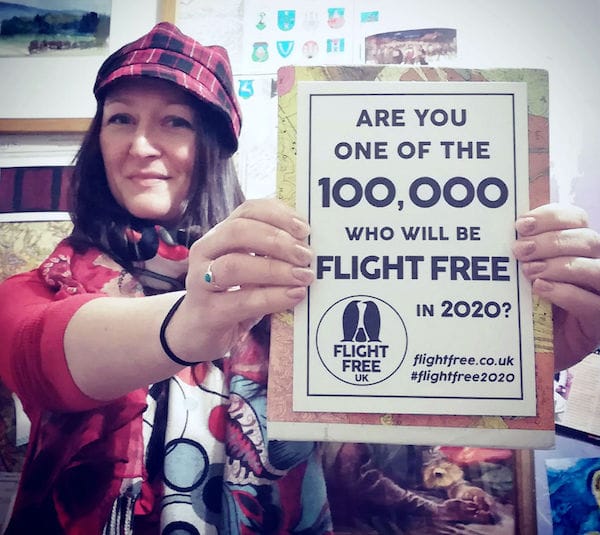
We all have an important part to play, frequent fliers and infrequent fliers alike. Here at Flight Free UK we will continue to encourage all people to join our campaign, from all walks of life, and with all levels of flight frequency – in the knowledge that each of us can play a crucial role in the urgent battle against climate breakdown.