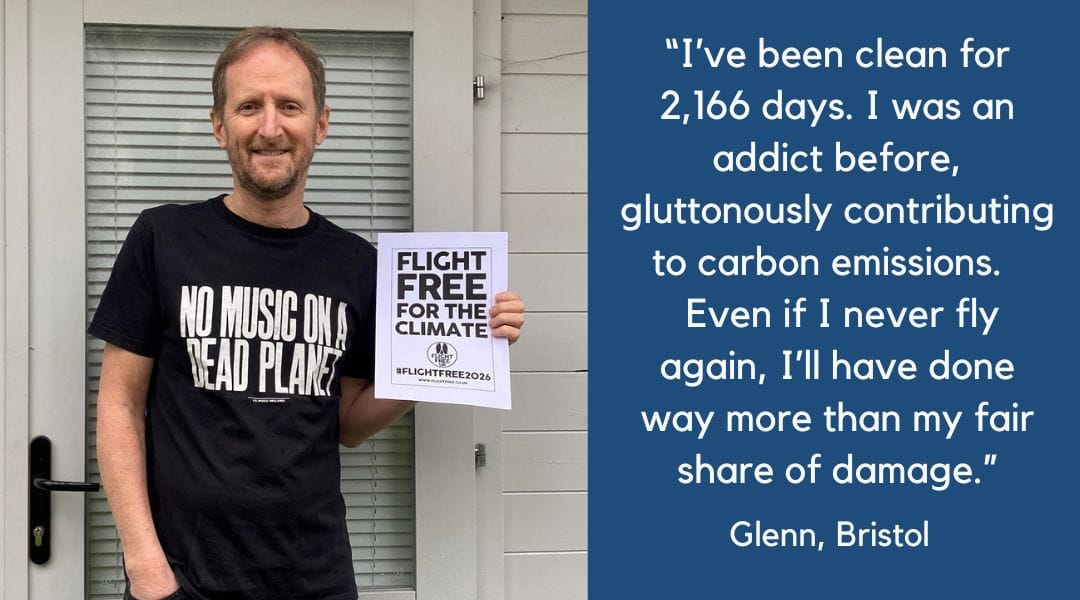
At the time of writing, I’ve been clean for 2,166 days. I was an addict before.
My first ever flight, at the age of 22, was to New York. My last ever flight was back from New York at the age of 51. I wrote the following on the plane:
“I am feeling strong emotions and also conflicted as I write this short piece. This morning, four days before the Transport Knowledge Hub event ‘Decarbonising Transport’ that I’ll be speaking at in London, I was sat in an office on Broadway in New York watching footage on my laptop of one of my heroes, climate crisis activist Greta Thunberg, addressing 30,000 people in Bristol, the home of my university – UWE.
Where am I writing this? I’m 35,000 feet above the Atlantic. Flying back from New York to London having been on a trip to discuss rethinking transport planning to address uncertain change and a need to decarbonise transport. A hypocrite you might say? I paid the carbon offset for the trip. But it still didn’t feel like it meant much to do that – easing guilt rather than paying my dues to Mother Nature.”
I was a frequent flyer before that. Gluttonously contributing to carbon emissions. Even if I never fly again, I’ll have done way more than my fair share of damage.
The pandemic, added to my growing concern about climate change, gave me the out. For a while hardly anyone was flying. New ways of working emerged. It was time to take that step. I realised I was later to the party than many around me, and yet still earlier than most.
I have choices about my own behaviour. I believe the system needs to change fundamentally. And I believe others have their own choices to make, since I don’t know their circumstances.
I don’t miss it. I find it harder over time to understand how so many people cope with the cognitive dissonance of flying, given the apparent concern over climate change and social inequality. I’ve still contributed to international events as a speaker, doing so remotely, although it’s frustrating when international in-person-only events make no accommodation for remote contributions.
I do wonder if I’m a ‘never ever fly again’ person or whether I need to follow the advice of a non-flying friend and allow myself a flight every few years in case of importance for loved ones. Easy for me perhaps at my career stage not to fly. Less so for others who still seek international experience or feel the obligation to travel to far-flung conferences because it helps career advancement.
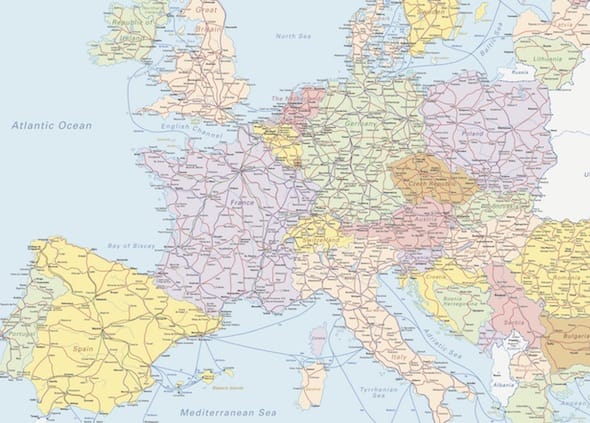
If our family goes on holiday abroad together this year it will be to a destination I can reach by train in a couple of days, while they fly there – my choice and their choice. We’ve done this a few times. I can confirm that it is a lot cheaper per person to fly than to go by train. Something isn’t right with the system.
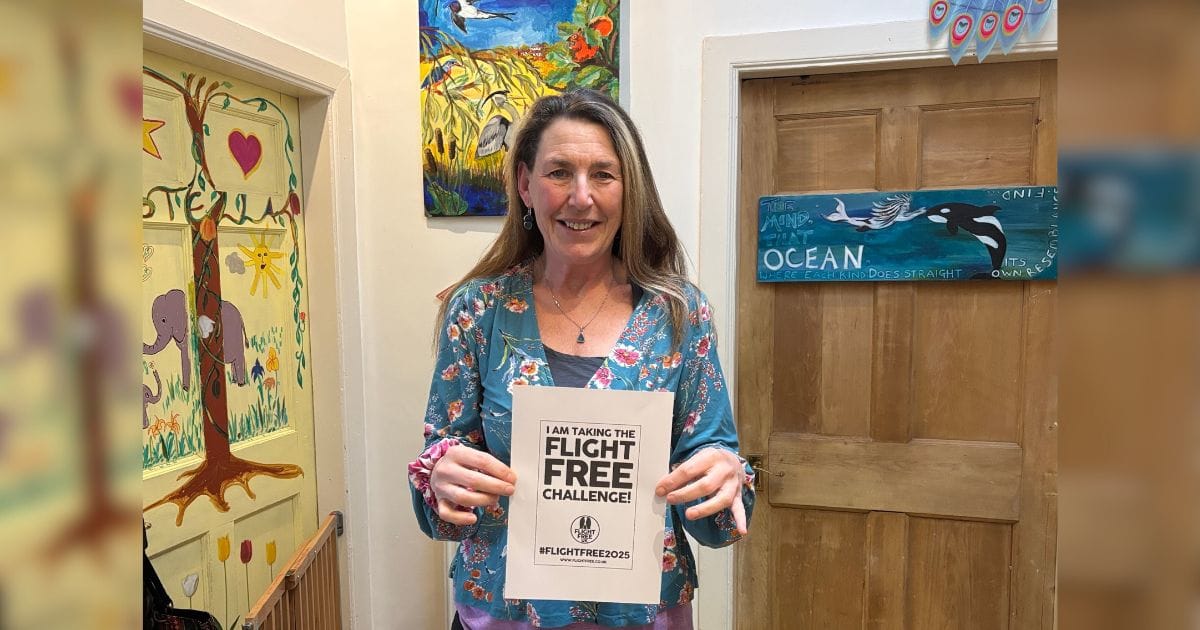
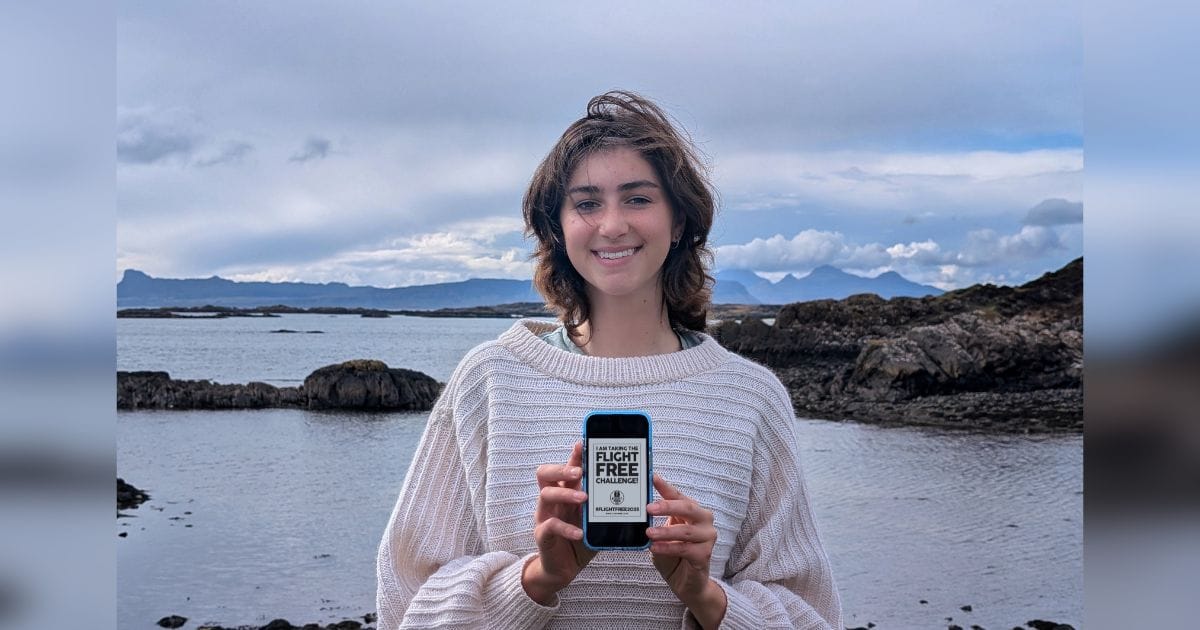
For my part I’m only too aware that humanity is not decarbonising its behaviours at the rate that is needed to hold onto the hope of a better future. I’m now a grandfather and very aware that my granddaughter’s future is in my hands. The least I can do is to refrain from flying. I pledge to be flight free in 2026.
P.S. On my last flight I watched The Eleventh Hour, a 2007 documentary about the state of the natural environment and climate change. Here’s a quote from one of the commentators (who, uncannily, has my surname) – Oren Lyons, Faithkeeper, Turtle Clan, Six Nations, Iroquios Confederacy:
“So what if we choose to eradicate ourselves from the earth? Whatever it means, the earth goes nowhere. And in time it will regenerate. And all the lakes will be pristine; the rivers, the waters, the mountains - everything will be green again. It will be peaceful. There may not be people. But the earth will regenerate. And you know why? Because the earth has all the time in the world. And we don’t”.
I encourage you to watch it if you get the chance – if you do, see if you still have the conscience afterwards to subscribe to a business as usual society driven by consumption, profit and growth.