The construction company I work for got a contract in Tbilisi, Georgia, so organised to send us out for two months to undertake the job. I haven’t flown since 2018, and having travelled extensively around Europe by bike and train since then, I was pretty sure it was possible to get there without flying.
With the invaluable help of the Man in Seat 61, I worked out my six-day commute:
Day one:
- Eurostar London to Amsterdam, Nightjet sleeper train to Munich
Day two:
- Flixbus Munich to Sofia
Day three:
- Flixbus Sofia to Istanbul
Day four:
- YHT (Yüksek Hızlı Treni) Istanbul to Ankara
- Dogu Express Ankara to Erzurum
Day five:
- Coach Erzurum to Hopa
- Dolmus (minibus taxi) Hopa to Georgian border, walk across the border
- Minibus taxi to Batumi
Day six:
- Train Batumi to Tbilisi
The journey started in Bedford, but I didn’t trust Thameslink to get me to St Pancras in time for the morning Eurostar departure, so I came down the night before and stayed in a hostel. Inevitably the journey started on a rail-replacement bus service to Hitchin – thanks Thameslink!
The Eurostar departed at 0616 the next morning, arriving in Amsterdam at 1115 where I had six hours to kill before the sleeper train. The plan had been to hire a bike and tour the city, but heavy rain was forecast so it was a wander around followed by a couple of beers, which was just as good.
The Nightjet sleeper train departed at 1900, and I had a great night’s sleep in a comfy bed. There’s room for three beds in each compartment, but the top bunk remained unoccupied, leaving just me and a Dutch chap travelling to Salzburg for work. We arrived the next morning into Munich where I had time for a quick wander before catching the Flixbus from Munich to Sofia – sadly no time to sample the wares at Oktoberfest.
I boarded with trepidation! I was slightly dreading the 19-hour journey: 1,300km across six countries, Germany, Austria, Slovenia, Croatia, Serbia and Bulgaria. But the bus was pretty comfortable, and the scenery was incredible as we traversed each country. Plus the driver stopped every couple of hours so we could stretch our legs.
The views in Austria were amazing: rivers, mountains and forests. It felt a shame to pass through Slovenia so quickly, especially Ljubljana – my favourite city out of any I’ve been to, which on this occasion only involved the bus station – and Croatia passed in a blur. At this point I was feeling better than expected. It was getting close to 12 hours as we closed in on the Serbia border, which we reached after sunrise on day three. Sleep had proved elusive on the night stretch of the bus, but overall the journey was more enjoyable than expected.
Then it was straight onto another bus! The Flixbus from Sofia to Istanbul – a mere 566 km. However, crossing the Turkish border was a bit chaotic. We rolled up at 4.10pm and didn’t get through until 8.30pm, so we didn’t reach Istanbul until gone midnight. I got a room in the cheapest central hotel I could find – very basic, but infinitely better than sleeping on a bus.
The Turkish Railways High-Speed Train (YHT) from Istanbul to Ankara departed at 1220 the next day, arriving a couple of hours later, in time for me to pick up the Dogu Express from Ankara to Erzurum. This was the part of the commute I’d been most looking forward to. The train was nowhere near as sleek as some of the other trains, but it was definitely the star of the show: a 26-hour sleeper train, trundling through the incredible landscapes of the Turkish interior. It was one of the greatest travel experiences of my lifetime.
The Dogu Express travels all the way to Kars, the most easterly station on the European rail network, but Erzurum was the end of the line for me. From there it was a coach to Hopa, on the Turkish Black Sea coast. The scenery was again spectacular – reminiscent of Morocco in parts.
A dolmus (minibus taxi) took me the 20 minutes from Hopa to the Georgia/Turkey border, where I then had to get out and walk across. There are no cross-border buses or trains here: Turkish buses and minibuses stop on the Turkish side, and Georgian buses and marshrutkas start on the Georgian side, mostly for legal and customs-control reasons. It sounds annoying, but it wasn’t: the walk only took 10 minutes, and the border is modern, well-signposted, and very used to tourists.
Another minibus taxi took me to Batumi, about an hour further up the Black Sea Coast. It’s a fascinating place, a weird juxtaposition of Soviet-era apartment blocks and towering modern skyscrapers.
The intention had been to take a train to Tbilisi that day to finish the commute, but as with all good stories, there’s a twist. I’d arrived on the only weekend where no trains were running, and I’d missed the last bus, so it was a night and a day in Batumi before I could get the next train to Tbilisi, Georgia, departing at 40 minutes past midnight (there’s a song in there somewhere). I arrived in Tbilisi at 6am the next morning – seven days to the minute since leaving London on the Eurostar. That felt like a nice symmetry.
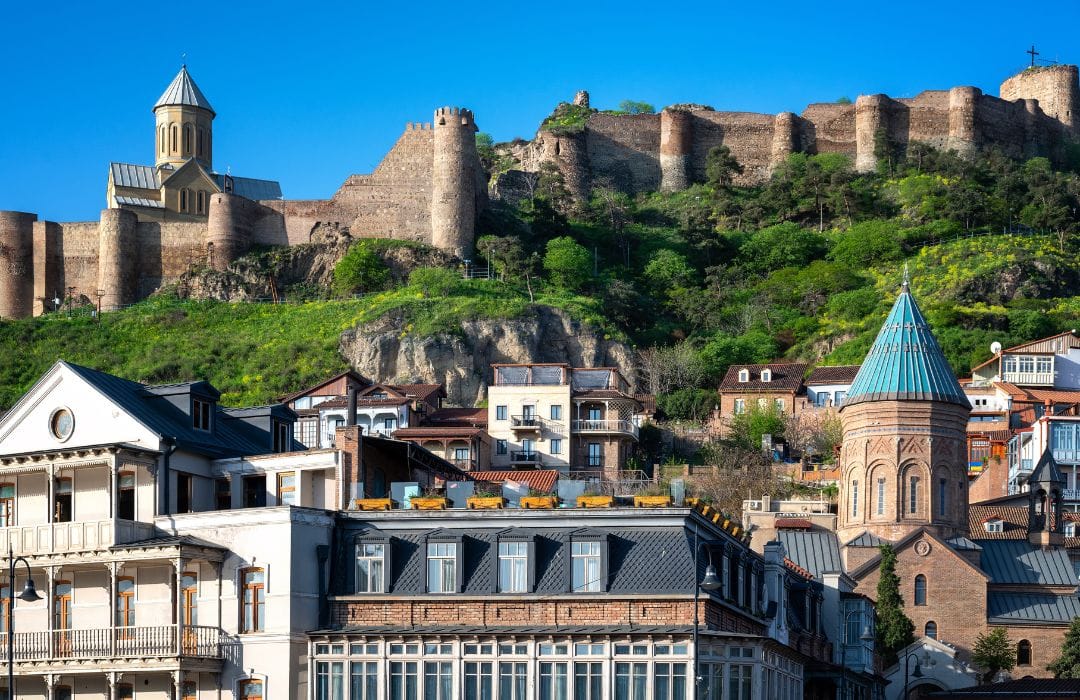
Arriving by train into a place you know nothing about, in a country far from home – you can’t beat that sense of anticipation. I hadn’t been to Georgia before, but growing up as an 80s kid I always had a fascination with the Soviet Union, so I had read up a fair bit. I have to say, the country exceeded my expectations in every regard. It’s a wonderful place.
The rest of my team did fly, from London to Istanbul and then on to Tbilisi. They know about my love of slow travel, so they were interested in the trip, and a couple said they were a little jealous! Some of the expats we met out there said they would like to try it, particularly when I showed them the pictures from Turkey.
I had wondered if my company would be OK with me travelling overland, but they were fine about it, as it didn’t have any impact on the work – I chose to finish my previous job a week early so I had time for the journey. That was at my own expense, but I saw this as an experience too good to miss out on.
The total cost of the journey was about the same as flying (£280 compared to £220 for the flight) and as we get a flight allowance and a travel day paid, the total amount covered my tickets and accommodation. Using the coach helped to keep the cost down, and the further east you go, the cheaper the transport is – for example, the 26-hour sleeper train across Turkey cost just €35.
I am a pretty experienced overland traveller, but this was by far the most complex journey I had put together. There were so many moving parts! Thankfully there are a ton of resources out there, such as the Man in Seat 61 website, which I can’t recommend highly enough. My tip to others looking to make a similar journey would be to build in some spare time between the different connections, just in case anything is running late. And be fully open to the experience – you meet some fascinating people on long-distance trains, it’s easy to get chatting and make friends, particularly if you’re sharing a sleeping compartment.
It’s a wonderful way to travel across the continent, you see everything and get to experience a little of every country you pass through. It gives you a real sense of the geography of the world in which we live. Slow travel is the best, it’s about the journey and not just the destination. A bit of a cliché, but that’s why it’s true!
Outward:
- Eurostar London to Amsterdam
- OBB Nightjet Amsterdam to Munich
- Flixbus Munich to Sofia
- Flixbus Sofia to Istanbul
- YHT (Yüksek Hızlı Treni) Istanbul to Ankara
- Dogu Express Ankara to Erzurum
- Coach Erzurum to Hopa
- Minibus taxi to Batumi
- Train Batumi to Tbilisi
Return:
- Train Tbilisi to Batumi
- Bus to Kars
- Dogu Express to Ankara
- YHT (Yüksek Hızlı Treni) to Istanbul
- Istanbul-Sofia Express (night train)
- Bosphorus Express night train to Bucharest
- Ister sleeper train to Budapest
- OBB Nightjet sleeper to Berlin
- Deutschebahn to Rotterdam
- Metro to Hook of Holland
- Ferry to Harwich
- Greater Anglia to London
- Thameslink to Bedford
In January 2025 we were devastated to learn that, shortly after completing this journey, Tim died by suicide. We have published the account of his story to honour and celebrate his adventurous personality and his dedication to flight-free travel. He was a prolific traveller and always shared his stories online, hoping it might inspire others, so it felt fitting to share his story here.
In the summer of 2025, a group cycled from Lands End to John o’ Groats in Tim’s memory. You can read about Tim and the memorial ride here.