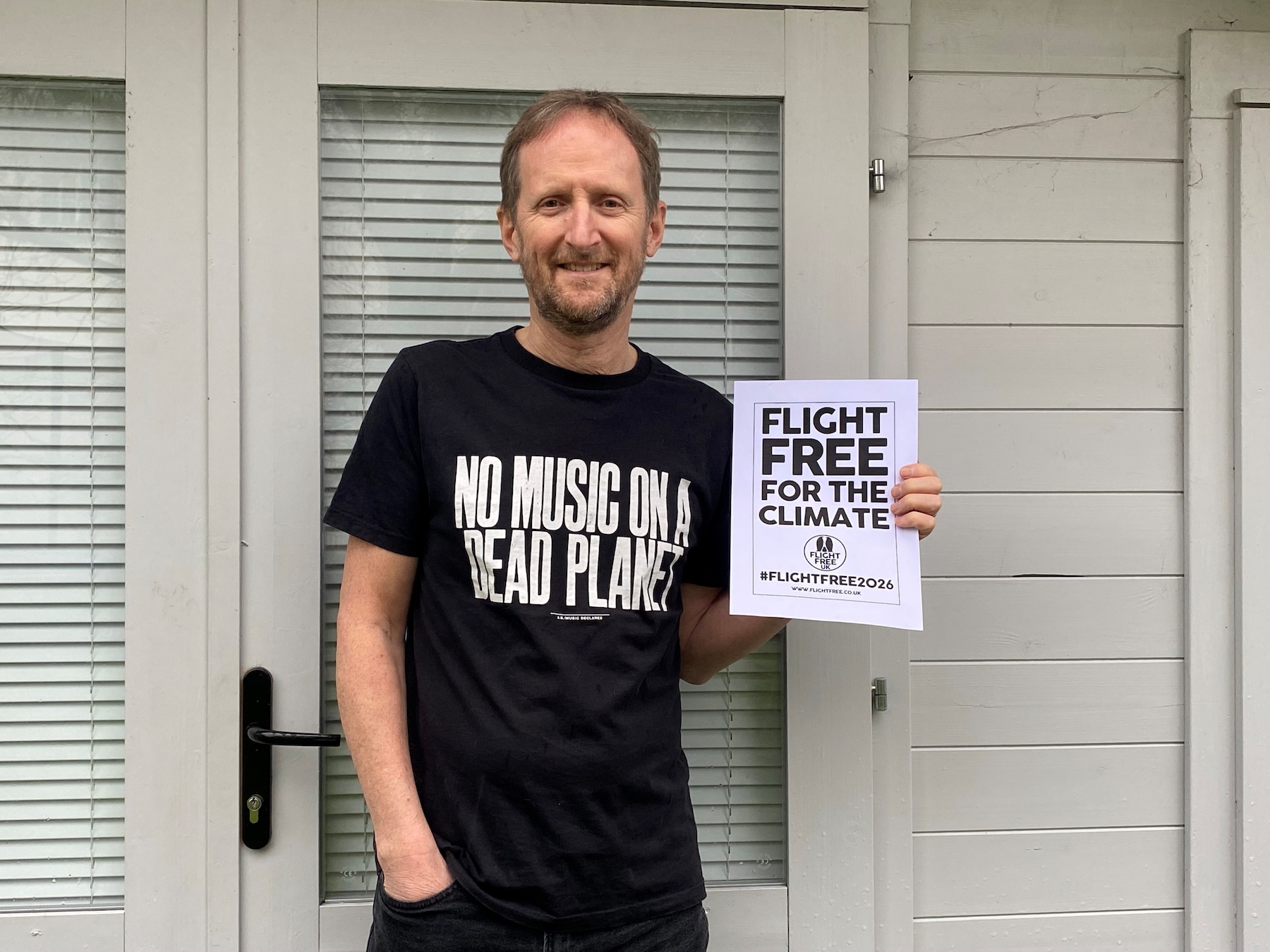
I made a pledge not to fly in 2019.
The Flight Free UK campaign, plus the UK government’s declaration of a Climate Emergency, protests by Extinction Rebellion, Greta Thunberg, and the warning from David Attenborough that the coming decade was critical, had convinced me that I could no longer justify flying for holidays.
Making the decision easier was the fact that we were about to have our second baby – babies in airports and aeroplanes are not much fun for anybody – and what made it easier still was that, having tried some global travel, my favourite place to go on holiday was still the Lake District.
But it was a pledge that I made in private. I was an airline pilot, and appearing on the Flight Free UK Testimonials page might get me in a lot of trouble.
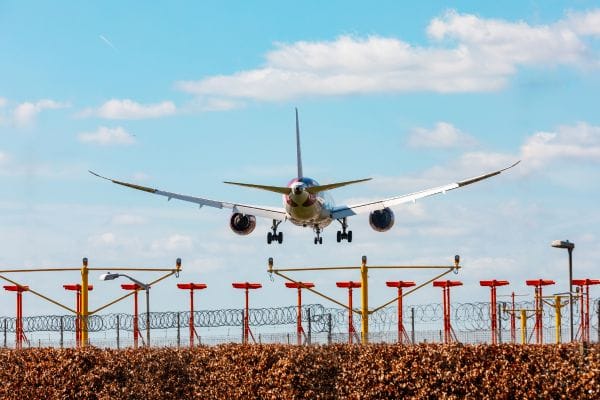
Although I had decided not to fly for my own holidays for a while, I couldn’t see a problem in continuing to operate the aeroplanes which carried other people on theirs.
For the next five years, I worked on this theory: if people had chosen to fly, it was my job to keep them safe and do my bit to reduce their carbon footprints by flying the aeroplane as efficiently as I could. It was just my role in society, and even my opportunity to do my bit for the climate.
This worked, to an extent. But as time passed, signs that I was becoming increasingly misaligned with my work accumulated. When the airline industry bounced back from lockdowns, I had mixed feelings: while part of me was relieved that my job was secure again, another part of me felt sad that we had not taken the opportunity to change our travel habits. In the record-breaking heatwaves of 2022, the browning of leaves in August as trees struggled to survive triggered guilt, as well as sadness and anxiety.
I kept telling myself that, by doing my job carefully, I was saving fuel and helping the planet, but the sights, sounds and smells of jet aircraft, were becoming increasingly repellant. And the views from the flight deck windows, the best office views in the world, were becoming a daily reminder of what we were risking.
I latched onto any excuse I could find to continue flying. I told myself that the ‘grown-ups’ – the government and industry leaders – would not let climate change get out of hand; they would bring about change when really needed, and they would give me sustainable aeroplanes to fly when the time was right. I grabbed an opportunity to become a company ‘sustainability champion’, but quickly became disillusioned when I found the focus was on cardboard cups and wooden cutlery. And at home, we invested in solar panels and an EV – a kind of ‘offsetting’ of my career choice. I was in conflict with myself.
In the winter of 2024/25, I reached a crisis point. First, I spent a company travel voucher on taking the family flying for a long weekend in Lisbon. In refusing air travel to my growing kids when I went on an aeroplane almost every working day, I was feeling like a hypocrite. How could I justify refusing to take them on an aeroplane? But it felt like a sign that I was giving up, allowing my values to be bought.
Second, my airline featured heavily in a BBC documentary about the emissions problem in aviation, and a senior leader defended the company’s growing emissions with logic which seemed utterly nonsensical: it was fine for airlines to expand as long as they were also becoming more efficient, even if the expansion outpaced the efficiency gains.
Third, and partly as a result of that documentary, I realised that my efforts to fly efficiently were doing no good at all; in fact they were probably making the situation worse. By flying efficiently I was helping to keep costs down, making flights cheaper, meaning more people could fly and my airline could grow faster.
Finally, learning about historical examples of people who had been complicit in unethical, destructive industries gave me a terrifying warning of the guilt I would feel if I continued as I was – trying to look away and making feeble excuses – either until I reached retirement, or until climate collapse burst the air travel bubble.
I realised I had no choice but to face the issue properly. I started reading and listening to anything I could find which might tell me that aviation was on the brink of finding an answer. I started reaching out more openly to the few former pilots I knew who had left aviation with similar concerns, and I expressed my own concerns to colleagues, hoping to find allies within my airline who would join me in asking questions of the bosses, and advocating for meaningful action.
But the only meaningful action I could see involved putting the brakes on growth, and possibly even scaling down – never a realistic hope in a dog-eat-dog market.
When I questioned the wisdom of airport expansion on a pilots’ WhatsApp group I had some scathing responses, plus a few supportive but private ones. Nobody was prepared to join me openly. And now I had a new reason to worry: I had stopped hiding my climate-related concerns but found no good answers, and in doing so I had become an outsider at work – some of my colleagues possibly even saw me as a threat, and I imagined the bosses might have a wary eye on me too. I felt very vulnerable.
The stress really started to affect me, and I realised I had to stop flying until I had found a way to sort this out. I briefly explained my situation to my aviation medical examiner, and he suspended my Class 1 Medical – I was grounded.
Over the following six months I continued to look for ways to pacify my internal conflict, including meetings with the Head of Sustainability, and then that senior leader who had appeared on the BBC documentary, making sure I left no stone unturned. I have to say that , during this time, I was treated kindly by my airline. But I discovered nothing new, and I left for good in February 2026.
So what now? It remains my firm belief that we should be flying much, much less. But what I find hopeful, even thrilling, is the thought that this could be easy, if we show how our lives can genuinely be improved by flying less.
Going flight free in 2019 felt like no sacrifce at all, and I absolutely do not see air travel as a necessity, or a right, or even, in most cases, as beneficial to our happiness. Air travel might shrink the world, but is a shrunken world really what we want? Doesn’t a shrunken world reduce the opportunity for adventure? Some of the happiest, wisest and most inspirational people I have ever come across have found joy, wonder, adventure and contentment in the world on their doorsteps. There are many ways to enjoy our planet, and I believe those people who say that slowly, thoughtfully and gently are the most rewarding, never mind being the best for preserving our futures.
I have started a website, substack and podcast called Look Near First, with the intentions of finding and exploring this wisdom and inspiration – I’d love it if you could check it out.
Since I left my flying job, the feelings of guilt and internal conflict have reduced. I cannot say my life is now stress-free; I have new challenges and difficulties, and I am realising how difficult it is to go against the flow even in a small way.
But there were times in the last few years when, up on the hills or surrounded by the lush green of the Lake District’s mossy forests, with rocky streams cascading through, I felt I couldn’t look those places in the eye.